
Most of Mexico City’s parks sit at street level. Parque Hundido does not. This one drops below the surrounding sidewalks, sinking into a depression that makes you feel like you’ve stepped down into a quieter, slightly cooler, slightly greener version of the city. The name translates to “Sunken Park,” and it delivers on the promise. You walk in at street level and descend into a recessed green space that feels genuinely removed from the traffic and noise above.
Located in Colonia del Valle, on Avenida Insurgentes Sur, Parque Hundido doesn’t appear on most tourist itineraries. It’s not flashy. There’s no admission fee, no gift shop, no audio guide. What there is: a pleasant, well-maintained park with walking paths, mature trees, an unusual collection of replica pre-Columbian sculptures, and the kind of relaxed atmosphere that makes you want to sit on a bench for a while and do nothing in particular. For anyone staying in the southern-central part of the city, or passing through on the way to somewhere else, it’s worth a detour.
How a Brick Factory Became a Park
The “sunken” part of Parque Hundido isn’t a geological accident or a clever landscape design choice. It’s the result of industrial history. The site was previously occupied by a brick factory that extracted clay from the ground over decades, gradually excavating a substantial depression in the terrain. When the factory closed, the city was left with a large, awkwardly shaped hole in what was becoming a residential neighborhood.
Rather than filling it in — which would have been expensive and logistically miserable — the city government decided to work with the existing topography. In 1963, under the direction of landscape architect Luis Barraган’s circle of influence (though the park’s design is attributed to various municipal planners), the depression was transformed into a public park. Trees were planted, paths were laid, and the sunken terrain was treated as a feature rather than a problem. It was a smart decision. The below-grade position gives the park a natural sense of enclosure and calm that a flat park on the same site wouldn’t have.
The park covers roughly 10 hectares (about 25 acres), which makes it modest by Mexico City standards — it’s no Chapultepec — but large enough to get genuinely lost in a morning walk. The paths wind through different levels and sections, with the terrain rising and falling as you move through the space.
The Pre-Columbian Sculpture Replicas
The most distinctive feature of Parque Hundido is its collection of replica pre-Columbian sculptures scattered throughout the grounds. There are over 50 reproductions representing various Mesoamerican civilizations — Aztec, Maya, Olmec, Toltec, Zapotec, and others. They’re placed along the walking paths, tucked between trees, positioned at intersections of trails, sometimes partially hidden by vegetation.
We should be clear: these are replicas, not originals. The originals live in museums, primarily the National Anthropology Museum in Chapultepec. But the reproductions are well-made, full-scale, and surprisingly effective at giving you a sense of the size and presence of Mesoamerican monumental art in an outdoor setting — which is, after all, where most of this art was originally displayed.
Walking through the park and encountering an Olmec head among the trees or a Toltec warrior beside a pathway gives the place a character that no other Mexico City park can match. It’s like an open-air museum crossed with a botanical garden, and the combination works. Kids seem to particularly enjoy it — there’s something about stumbling across a massive stone head while walking through a park that appeals to the eight-year-old imagination.
If you visit the Anthropology Museum and find yourself wanting to see some of those pieces in a more natural, less institutional setting, Parque Hundido offers a version of that experience. It’s not the same, obviously, but it’s a nice complement.
What the Park Looks Like Today
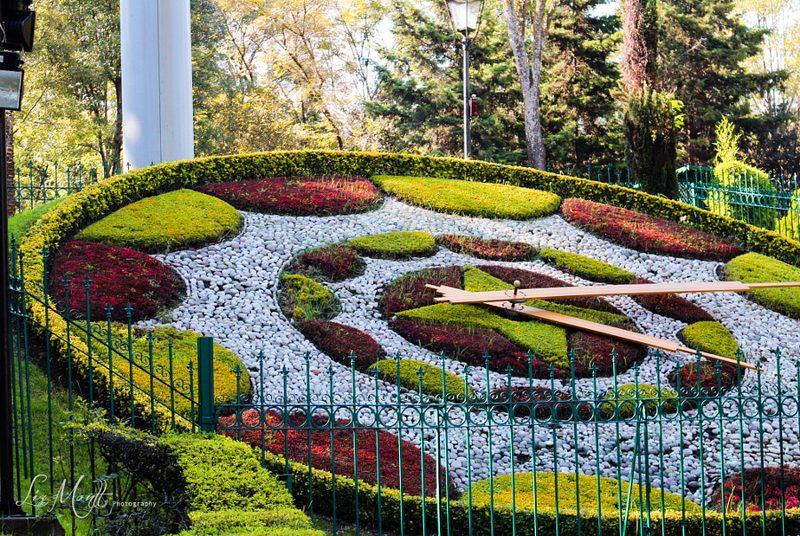
The park is well-maintained by Mexico City standards, which means it’s clean, the paths are in decent shape, and the vegetation is healthy. Mature trees — including several large species that provide substantial shade — make it a pleasant spot even during the warmer months. There are benches throughout, a few small plazas, and open grassy areas where people spread blankets on weekends.
The paths are mostly paved and accessible, though some sections involve steps or uneven terrain as you navigate the different levels of the sunken topography. The main circuit can be walked in about 30 to 40 minutes at a leisurely pace, but most people spend longer, stopping to look at sculptures, sitting on benches, or watching the joggers who use the park as a morning running route.
There’s a small outdoor theater (foro al aire libre) that hosts occasional cultural events — concerts, dance performances, community gatherings. A clock tower with a carillon sits near one of the main entrances and chimes periodically throughout the day. On weekends, you might find food vendors along the perimeter, and the surrounding streets in Colonia del Valle have plenty of cafes and restaurants if you want to combine a park visit with a meal.
Who This Park Is For
Parque Hundido is primarily a neighborhood park, and its main users are the residents of Colonia del Valle and surrounding colonias. Morning joggers, dog walkers, parents with strollers, elderly couples on slow walks, teenagers sitting on benches — it’s a cross-section of local life, not a tourist attraction.
That said, there are good reasons for visitors to come here. If you’re staying in Condesa or Roma Norte, the park is a short cab or metro ride south and offers a quieter, less crowded alternative to the parks in those neighborhoods. If you’re interested in pre-Columbian art and have already visited (or plan to visit) the Anthropology Museum, the sculpture replicas add an interesting outdoor dimension to that experience. And if you just want a peaceful hour away from the intensity of Mexico City’s busier districts, this delivers.
It’s also free, always open during daylight hours, and never crowded in the way that Chapultepec or the Alameda can get on weekends. You won’t have to fight for a bench.
Getting There
Parque Hundido is on Avenida Insurgentes Sur, between Porfirio Diaz and Millet streets in Colonia del Valle. The nearest metro station is Mixcoac (Line 7 and Line 12), which is about a 10-minute walk. You can also take the Metrobus along Insurgentes — the Ciudad de los Deportes station is nearby.
If you’re coming from central areas like the Historic Center, the Metrobus on Insurgentes is the most straightforward option. From Condesa or Roma, a taxi or rideshare takes about 15 minutes depending on traffic. The park has multiple entrances along its perimeter, so you can approach from several directions.
Combining With Other Visits
Colonia del Valle isn’t packed with tourist attractions, but it’s a genuinely nice neighborhood with good food and a residential feel that gives you a different perspective on Mexico City than the more visited areas. If you’re heading south toward Coyoacan or University City, the park makes a reasonable stop along the way.
For a full day combining green spaces and culture, you could start at the Anthropology Museum in Chapultepec in the morning, head south to Parque Hundido for a midday break, and continue to Coyoacan or San Angel for the afternoon. The sculptures in the park serve as a nice bridge between the museum’s collections and the broader cultural landscape of the city.